
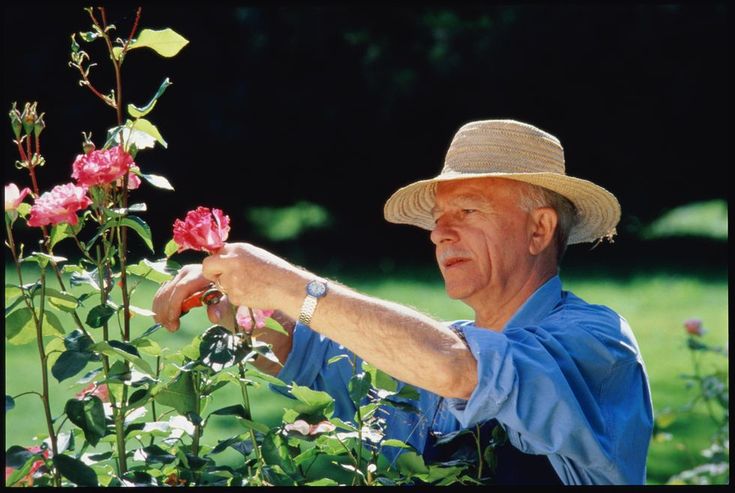
The Gardener
Have I lived enough?
Have I loved enough?
Have I considered Right Action enough, have I
come to any conclusions?
Have I experienced happiness with sufficient gratitude?
Have I endured loneliness with grace?
I say this, or perhaps I’m just thinking it.
Actually, I probably think too much.
Then I step out into the garden,
where the gardener, who is said to be a simple man,
is tending his children, the roses.
— from A Thousand Mornings by Mary Oliver
We have a garden at Grace and it’s not a side project or just something trendy that churches are doing these days! It is central to our identity and our mission as Christians. I am of the opinion that a church without a garden, at this point on our planet, is actually missing something.
In her book Contemplative Gardening, the Reverend Pamela Dolan quotes theologians Craig Dykstra and Dorothy Bass, who define spiritual practices as “the human activities in and through which people cooperate with God in addressing the needs of one another and creation.” I like this too. In Genesis, we learn that we are called into being to be created co-creators with God, and that no other thing created in the story has that privilege, that burden, that invitation. We are not masters, but we are…gardeners. We are asked to tend all living things, which includes our roses, our tomatoes, our trees, our rivers, our cats and dogs, our children and our own bodies. Because we are people who believe in a Loving God, a Creative God, a Generous God we will tend the roses as if they were our own children. Of course we will! Every created thing – including us – is a reflection of the irrepressible, abundant love of God. Growing things and paying attention to them on their own time, rooted and reaching, is a means of contemplation and prayer. It is a way to say thank you and to receive the invitation to be in active, generous relationship with the planet Earth, to be in humble and astonished relationship with God.
Pamela Dolan writes, “Let’s consider briefly how [our definition of spiritual practices] applies to gardening…gardens that grow vegetables and feed people obviously meet the human need for nourishing food, but other kinds of gardens are equally valid and meaningful, including ornamental gardens, medicinal or herbal gardens, memorial gardens, and prayer or meditation gardens. A garden with a purpose other than growing food will have a different impact on its community but can also be a source of profound healing and transformation; it can, for example, feed our human need for beauty, for respite, or for belonging.” I want to add that it can also feed our human need for purpose and participation in good, restorative work; work that is rightly ours to do, work that upholds our human dignity and ignites a sense of wonder and reverence. The kind of work that makes us put our hands in the dirt so that we can remember who we are, what we are, and Whose we are.
“Gardens are an act of faith; as such, they teach us both to trust and in the process and to hold lightly to the results,” writes Dolan. And contemplative gardening, she writes, “is gardening that puts practice and process over results and accomplishment, focusing one’s efforts on being in harmony with nature rather than achieving mastery over it.” Like any relationship, there is give and take; a garden does not “take care of itself” and, believe it or not, neither do we. We take care of each other and to forget this, or just leave it all to others and receive passively or simply be a spectator, is to miss a beautiful opportunity to be fully human, to be fully connected, to be made whole as a part of creation.
We have a little garden at Grace and to the extent that it just sits on the corner of our campus, ignored and auto-piloted, it doesn’t do much for us, does it? This would be true of our hymnals, our communion table, and our baptismal font too if we just let them sit there. All these things are just tokens of faith if they are not actively engaged in community, in relationship as subjects of faith and objects of faith, the material means by which we are in relationship with God. Unlike the hymnals, the table and the font, the garden is a living thing! How much more so does it draw us deeply into relationship with the Creator, Redeemer and Sustainer.
This Sunday, come and meet Pamela Dolan. Listen to her. Follow Jacob Zuniga over to our little garden after the sermon. Take a native plant home and connect our garden at Grace with your garden at home. When you come to campus, visit our garden and pray for it, and for all the birds, bees and crawling things that need it and love it. Touch the dirt, the plants. Say thank you. Promise that you will return. Remember that you are dust, you are light, you are resurrection, you are creation, you are beloved. Amen.
Sarah Christopher
Associate Pastor
Recent Comments